THE STACKS
Nestled into a hillside in Seattle’s Mount Baker neighborhood, this 1924 home had a yard with a steep slope, lots of shade and very little usable space. Craving a landscape that would inspire them to spend more time outdoors, the homeowners hired Terrain Studio to enhance the yard. A small lawn area, an improved grilling space, an overhead structure and a fire pit patio topped their wish list.
Stylistically, the couple were envisioning a relaxed, rustic landscape combined with more traditional elements in keeping with the home’s historical charm. “Tying the yard into the architecture of the house was their main priority. They didn’t want it to feel modern,” landscape architect Lauren Galante says. Taking cues from the existing landscape and materials used for the home, Galante and others on the Studio Terrain team created a cohesive, inviting outdoor space that connects house and landscape.
Garden at a glance
Who lives here: A couple
Location: Seattle
Size: 2,500 square feet (232 square meters)
Landscape Architect: Studio Terrain
Contractor: Terrain
Before:
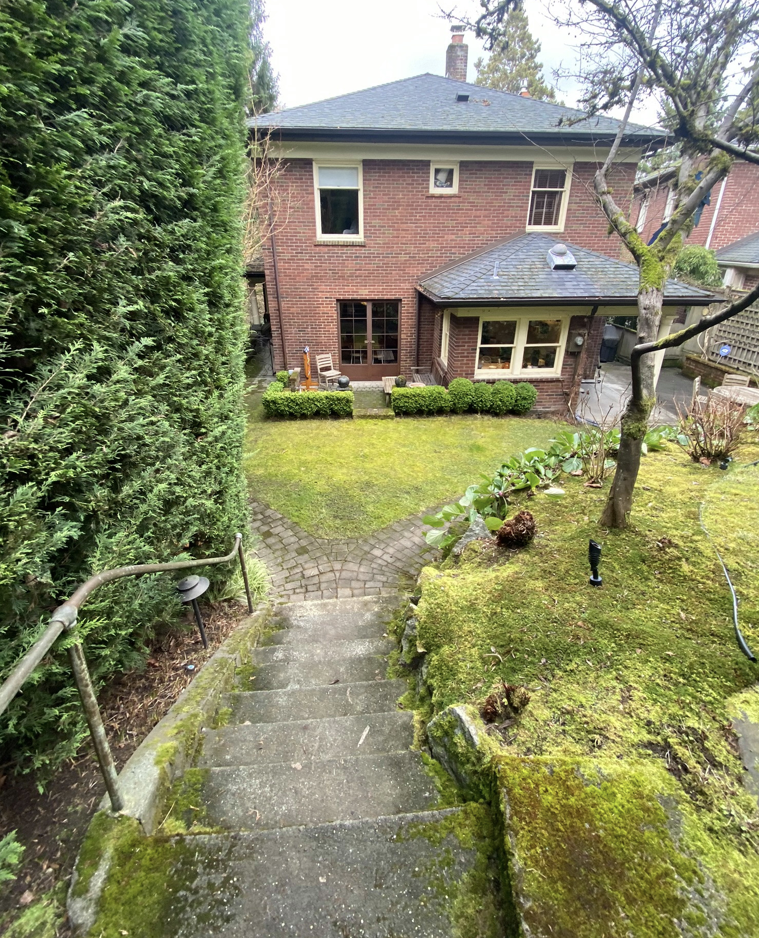
The homeowners park in their garage, which is located off an alley at the top of the backyard’s hillside. From there, they use this staircase, cross the yard and enter the house through a door on the right side of the house. They wanted the design to incorporate a path that would make this easy and connect the different backyard spaces. At the same time, they wanted to preserve a small open lawn space in the center for activities like playing cornhole.
Problems included some damaged and failing steps in the staircase, too much shade for a grass lawn to thrive and a lack of usable spaces that the couple could enjoy. Along with adding such spaces, the new design needed to incorporate a good circulation system between them.
After:
For the backyard renovation, Galante used a palette of brick and natural stones, matched the color of new elements to colors found on the home’s facade, preserved the original rockery on the hillside and used a variety of textures and colors in the plantings to create a naturalistic look.
The homeowners wanted a primary path and a secondary path. The new circulation plan incorporates a flagstone path that leads to the side yard on the left and the entry door on the right, and a steppingstone path that runs along the lawn area, connecting the primary path to the patio.
Lauren replaced all the existing hardscape materials, including from the back patio, with Cowboy Coffee flagstones, which have a bit of silver to them.

Because the shade in the yard made it difficult to maintain grass in the lawn area, Galante replaced the grass with a more shade-tolerant, walkable ground cover called miniature brass buttons (Leptinella gruveri, USDA zones 7 to 9; find your zone).On the secondary path that lines the lawn, the brass button plants fill the spaces between the flagstones. These pathway stones are irregular, bringing a rustic, natural look to all the hardscaping in the yard.
Before:
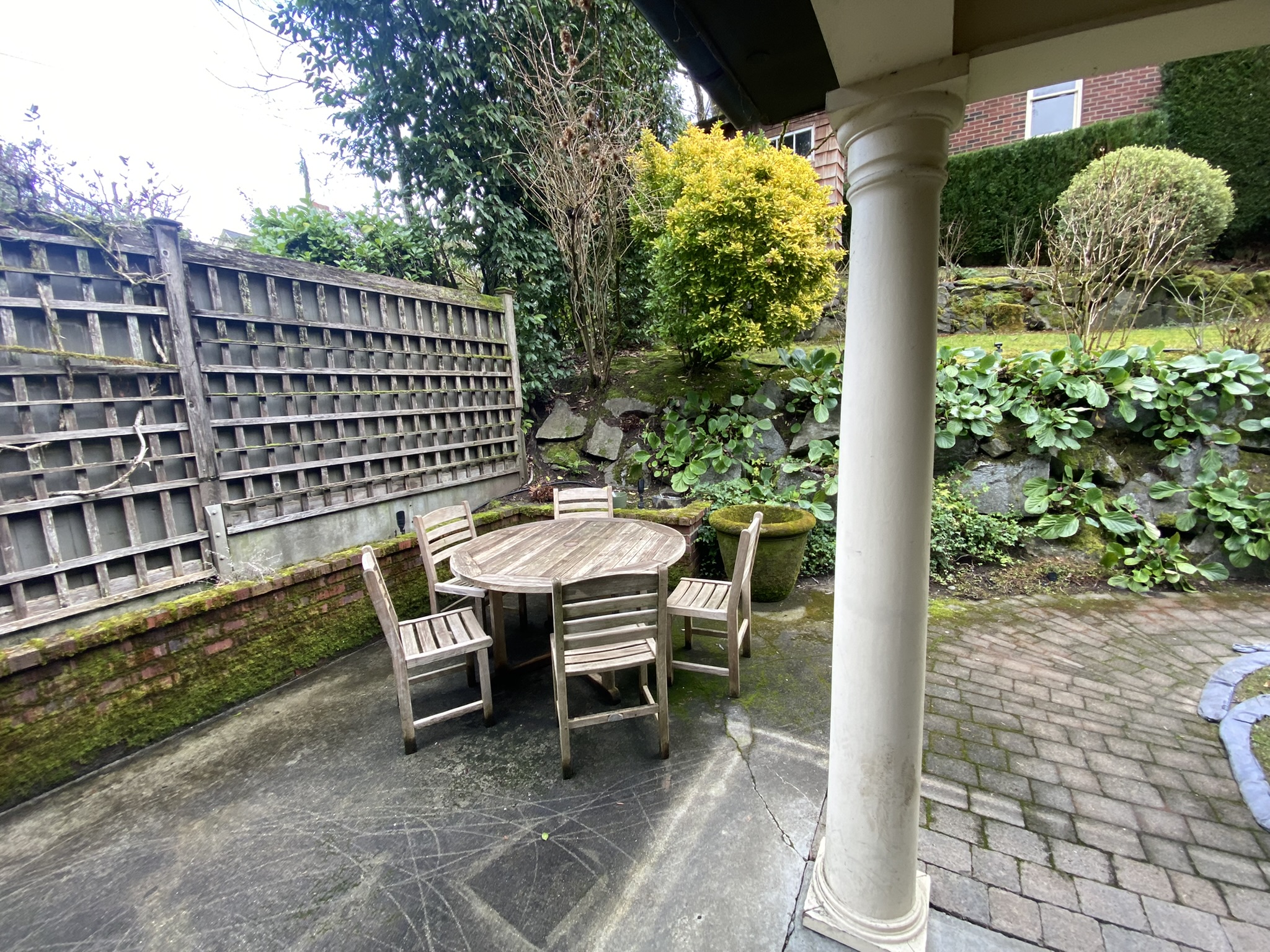
Off the right side of the house, which has an informal entry, the original patio consisted of concrete that had not aged well. Likewise, the decking in the adjacent grilling area was past its prime.
After:
Galante replaced the concrete with flagstone and added a fire pit and seating. “We went with a natural palette with the stone and the brick,” Galante says. The irregular shape of the patio is in keeping with the rustic look the homeowners desired.
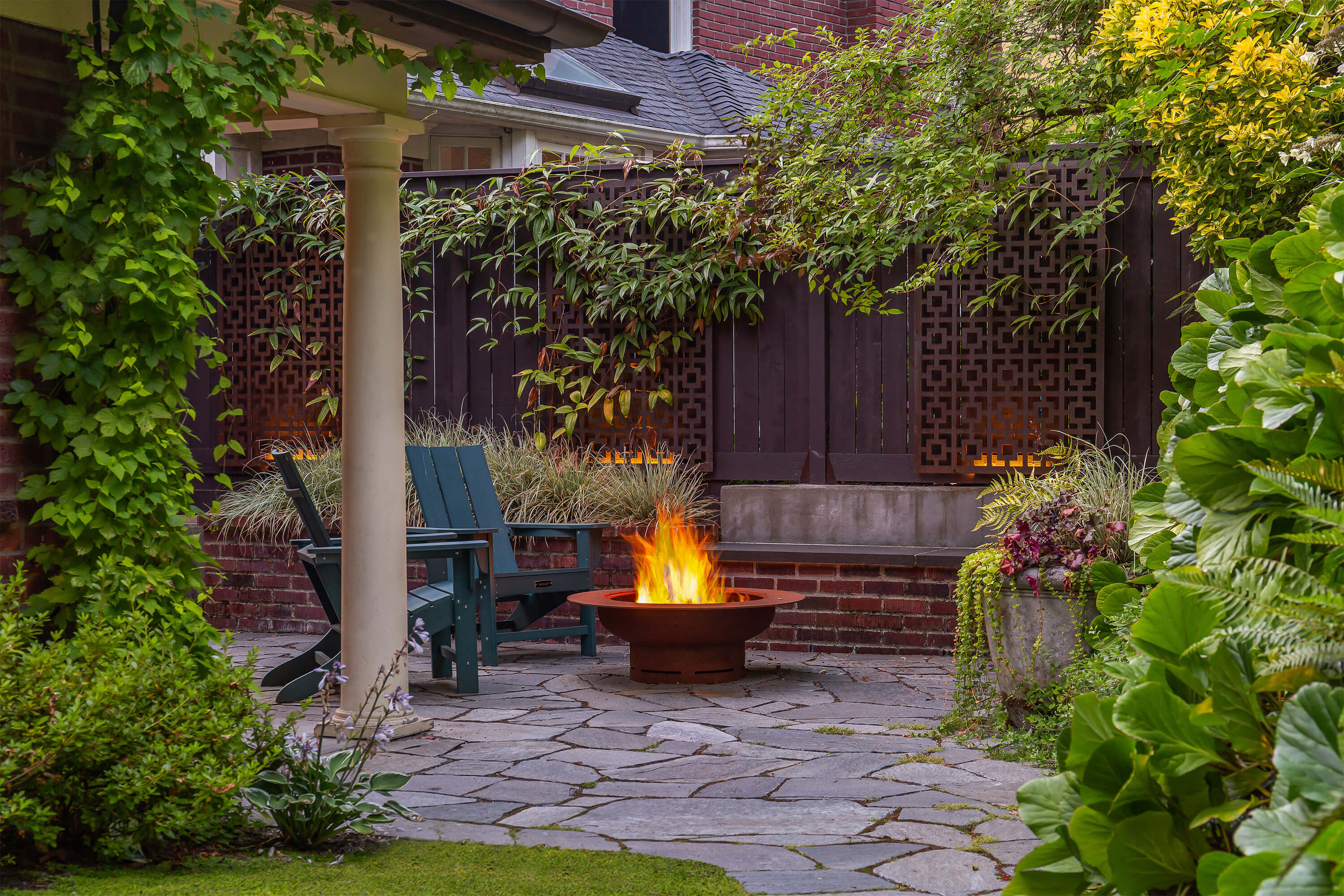
The vine growing up the corner of the house and along the entry overhang was another priority within the design. “This is a hop vine [Humulus lupulus, zones 4 to 8] that the homeowner has been growing for many years. He had trained it across the overhang, and it was important to him that we protect it,” Galante says. Galante reports that the homeowners love their pots and planters. She filled the built-in brick planters around the patio with ‘EverColor Everest’ Japanese sedge (Carex oshimensisEverColor Everest ’Carfit01’, zones 5 to 9), which adds soft color and texture against the fence. The pot on the right has autumn fern (Dryopteris erythrosora, zones 5 to 8) and creeping jenny (Lysimachia nummularia, zones 3 to 9).

Galante preserved the original brick planters, repairing them with some of the original bricks from the wall. She integrated a bench with a basalt seat and back along the fence between the planter seen here and another one around the corner to the right. This created an intimate seating area around the fire pit that also serves as a base for the fence.The fire pit is made of Cor-Ten steel and has a dedicated gas line. Cor-Ten steel rusts over time to a point at which corrosion stops, developing a patina that works beautifully with the natural materials.Fire pit: Seasons Fire Pits

The existing fence was in good shape, so the practical and sustainable choice would have been to keep it. However, the homeowners were not interested in looking at a boring blank wall of boards. To add pattern and interest to the back fence, Galante custom-designed laser-cut Cor-Ten steel panels. The colors of these panels work beautifully with some of the details on the home’s facade, including original bronze French doors on the back of the house. New lighting behind the panels highlights them and provides a cozy glow in the evening.
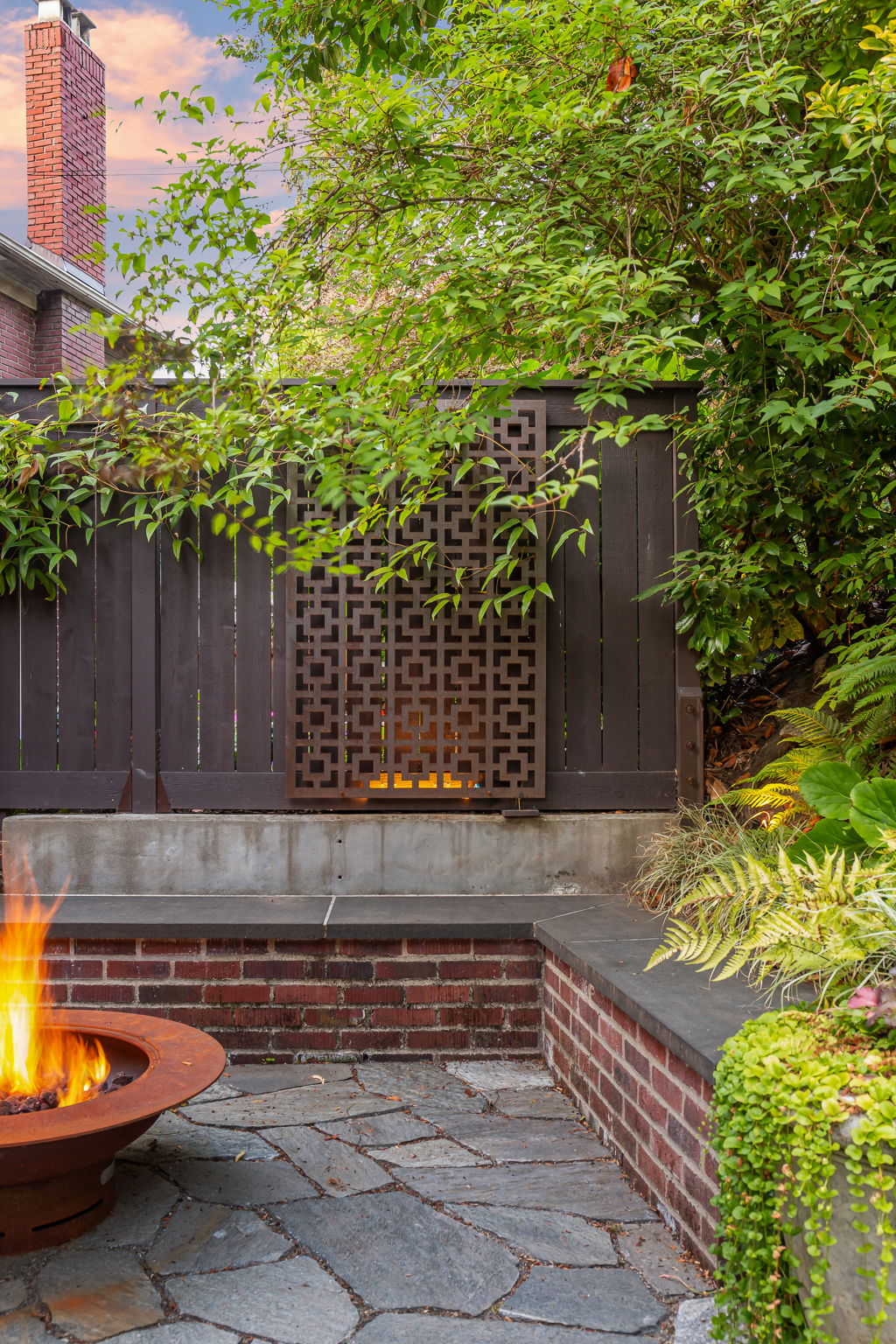
The brick, basalt, existing fence and Cor-Ten steel panels come together in this corner of the patio. While the stone seat ties the bench to the patio’s flagstones, the dark color of the basalt provides contrast.
Grilling Deck
Located off the kitchen, this small grilling deck had a surface and structure that needed improvement. The team installed new bamboo decking, a pergola and a grilling station, creating an inviting area for preparing and serving meals. “Bamboo decking is relatively low-maintenance and is more sustainable than Brazilian hardwoods,” Lauren says.

The grilling station has a leathered black granite countertop. “This is a forgiving finish to use outdoors,” Galante says. She repeated the use of Cor-Ten steel on the end panel on the right and on a small panel on the left to tie the grilling deck to the fire pit patio.“One of the clients’ requests was an overhead structure. We played around with this idea in a few different places and decided to put a pergola over the outdoor cooking area,” Galante says. The new pergola is wood, stained to match the color of the trim on the house. It gives the grilling area astrong architectural presence. Galante integrated lighting into the pergola to illuminate this area at night in a pleasing way.

Back Patio
The bronze French doors open up the dining room to this back patio. Galante repeated the use of flagstones from the other patio here, bringing the rustic, naturalistic look right up next to the house. The window behind the cafe table and chairs shows the entry area, and if you look closely, you can see some high bookshelves. “One of the homeowners is an author, and their house is filled with books. It’s a wonderful house that felt like a library to me,” Galante says.

The back patio enjoys a view of the backyard’s lush hillside. The original globe-topped pillars and boxwood shrubs (Buxus spp., zones 5 to 9) maintain a formal look that works well with the home’s traditional architecture and balances the looser style of the new landscape design.While everyone involved would have liked to save the existing staircase, it was in terrible shape, which rendered it unsafe. Accordingly, the team members poured a new staircase, although they were able to preserve the existing custom metal handrail. They also kept the evergreen wall formed by the existing arborvitae trees (Thuja spp., zones 3 to 7) to the right of the stairs. Galante filled in mossy areas on the left side with plants including ferns, grasses and ground covers.The project also incorporated lots of new landscape lighting, including path lights for safety.
Plantings
The homeowner’s beloved hops vine is seen on the right side of this photo. Galante filled in the rest of the planting bed with a wildly beautiful and loose mix of plants, including ‘Bluebird’ hydrangea (Hydrangea serrata ‘Bluebird’, zones 6 to 9), Autumn fern, black mondo grass (Ophiopogon planiscapus ‘Nigrescens’, zones 5 to 10) and various hosta hybrids (Hosta spp., zones 3 to 9, depending on species), including ‘Sum and Substance’, ‘Monalisa’ and ‘Frosty Ribbons’.


Here’s a closer look at the plants in the bed between the primary and secondary paths. They include a Japanese maple (Acer palmatum, zones 5 to 8), black mondo grass, ‘EverColor Everest’ Japanese sedge and Himalayan maidenhair ferns (Adiantum venustum, zones 4 to 8).
Before:
Maintaining the look of the existing rockery that terraced the backyard’s slope was important to the homeowners. Galante preserved the existing plants, including the pigsqueak (Bergenia cordifolia, zones 3 to 8) that grows between the rocks and the hydrangea (Hydrangea spp., zones 5 to 11), seen here without leaves in winter. The shingled structure at the top of the hill is an old playhouse; it was removed during the renovation.
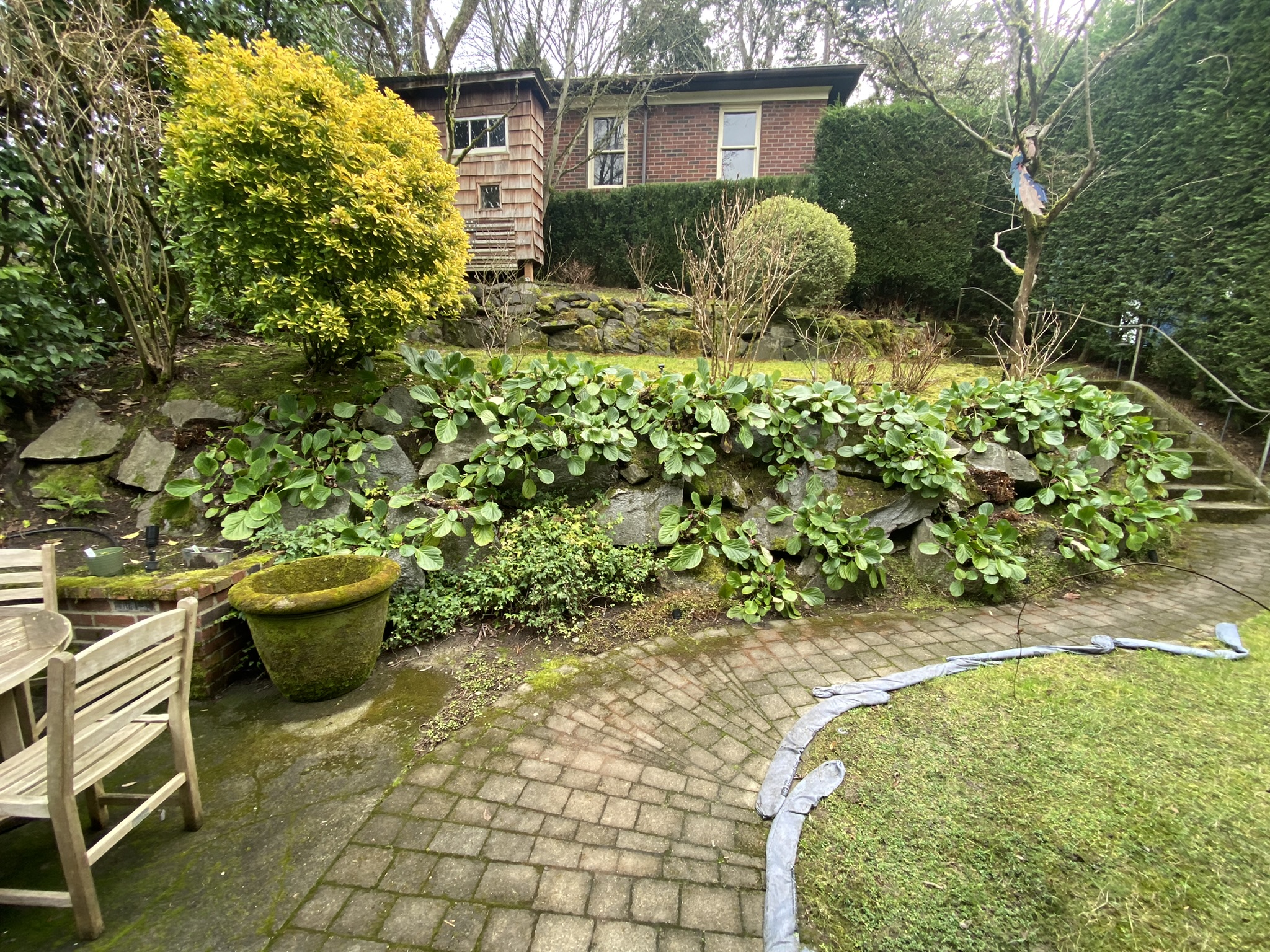
After:
Galante filled in the slope where necessary, particularly in the left corner above the fire pit patio. In this area, she repeated the hostas and hydrangeas and added dense spreading yews (Taxus cuspidata ‘Densiformis’, zones 4 to 7) and ‘October Magic’ camellias (Camellia sasanqua ‘Green 02-004’, zones 7 to 9). The yews provide evergreen color year-round, while the camellias provide showy white flowers in fall and early winter.
She also filled in the mossy area seen on the terrace in the first photo. To keep a walkable area across the terrace for plant maintenance, she used carpet bugleweed (Ajuga reptans, zones 3 to 10) as a ground cover.

As soon as the homeowners step out of the garage, they are greeted by the view of their lush backyard. Inviting paths lead them to their home.The new design has everything the homeowners wished for, including a naturalistic design, a convenient grilling deck, a pergola, a fire pit patio and a place where they can play cornhole. All of these spaces are connected through charming pathways and materials that tie them together.
Site Plan
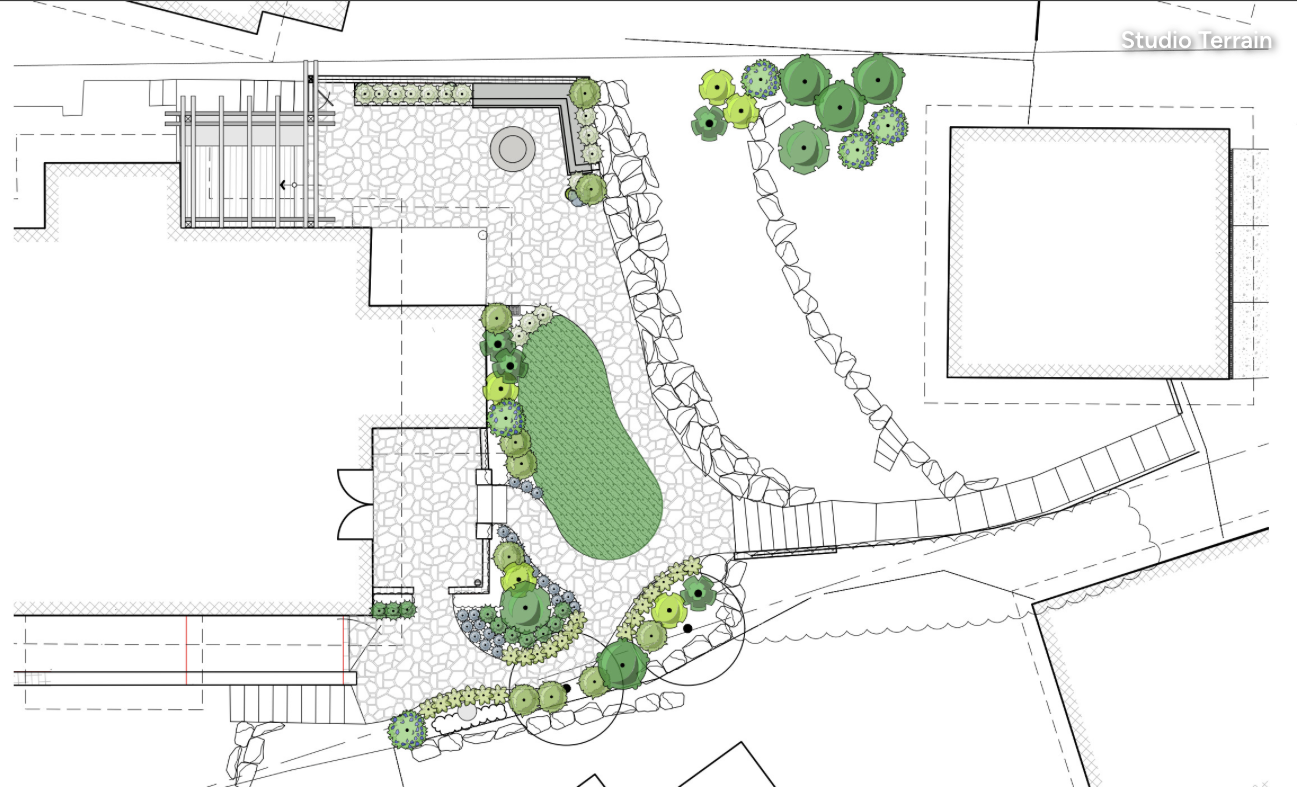
The garage is on the top right, with the staircase running down from it. The lines of rocks off the staircase form the terraces. The pergola-covered grilling deck is in the top-left corner, and the fire pit patio is next to it. The brass button lawn is the green swath in the center. Please note that the steppingstone path next to the lawn is shown as a solid flagstone path on this plan; it was changed during the design process.
Article written by Becky Harris and originally published on Houzz.